PTSD and Accelerated Biological Ageing
PTSD does more than affect the mind. Research now links it to shorter telomeres, the protective caps on your DNA, suggesting the body may age faster after…
On this page
Your Body Keeps a Different Kind of Clock
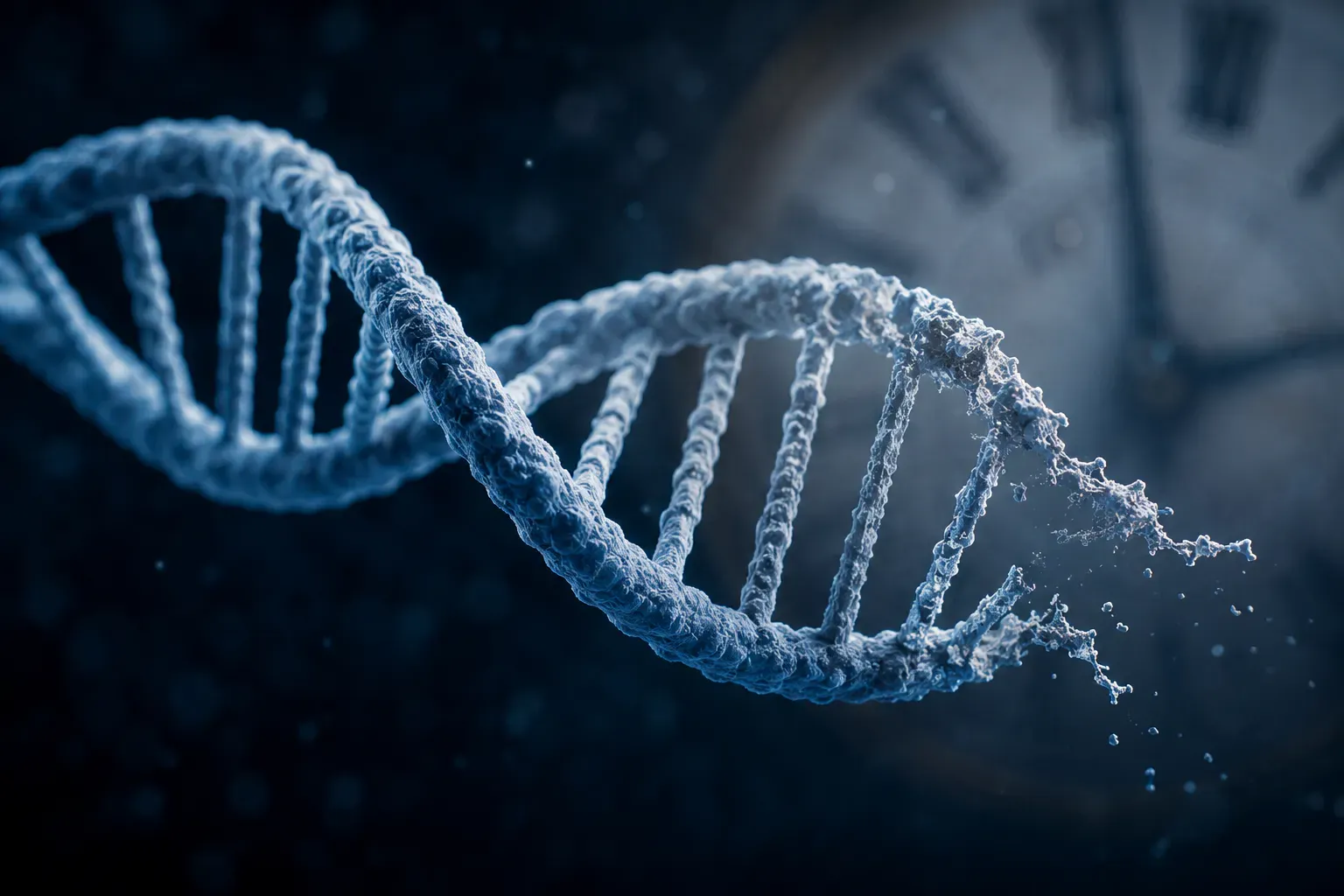
Most people think about PTSD in terms of mental health. Understandably so. But a quieter conversation is happening in research laboratories, and it concerns something far more physical: how fast your cells are ageing. Scientists have been looking at telomeres, the tiny protective caps on the ends of your chromosomes, and what they are finding about PTSD survivors is striking.
Telomeres naturally shorten a little each time a cell divides. Think of them like the plastic tips on shoelaces. When they wear down too far, the cell can no longer divide properly and begins to malfunction or die. Shorter telomeres are associated with a higher risk of cardiovascular disease, type 2 diabetes, cognitive decline, and earlier death. The rate at which they shorten is, in part, shaped by chronic stress.
What the Research Actually Shows
Several studies have now found that people with PTSD have measurably shorter telomeres compared to trauma-exposed people without PTSD, and compared to non-trauma-exposed controls. A key question researchers have wrestled with is whether trauma exposure alone shortens telomeres, or whether it is the sustained psychological response, meaning PTSD itself, that drives the effect.
The evidence is pointing toward PTSD being the more significant factor. Research published in the journal Psychoneuroendocrinology found that PTSD symptom severity was independently associated with telomere shortening, even after controlling for age, sex, and trauma load. This suggests the body’s prolonged stress response, not just the traumatic event itself, is doing biological damage over time.
A separate line of inquiry has looked at oxidative stress and inflammation as the likely go-betweens. Chronic activation of the stress response elevates inflammatory markers like interleukin-6 and tumour necrosis factor-alpha. These compounds are known to accelerate telomere attrition. Studies examining inflammatory pathways in PTSD have consistently found elevated baseline inflammation in people with the diagnosis, providing a plausible biological bridge between psychological trauma and cellular ageing.
What Accelerated Ageing Looks Like in Practice
Biological age and chronological age are not the same thing. A 45-year-old with long-term untreated PTSD may have the cellular profile of someone considerably older. In practical terms, this can show up as:
- Earlier onset of cardiovascular problems
- Reduced immune resilience, meaning more frequent or severe illness
- Faster cognitive changes in midlife
- Poorer wound healing and recovery from surgery
- Increased vulnerability to metabolic conditions
None of this is inevitable, and it is important not to read this as a sentence. Telomere length is not fixed. It is influenced by modifiable factors, and that matters enormously for prognosis.
Factors That May Slow the Process
Research into telomere biology has identified several lifestyle and treatment factors associated with slower attrition or even modest lengthening over time. These include consistent aerobic exercise, reduced alcohol intake, not smoking, a diet rich in antioxidants, and, critically, effective treatment of the underlying PTSD.
This last point is worth sitting with. If PTSD symptom severity drives accelerated cellular ageing, then successfully reducing those symptoms is not just a mental health win. It may also be a physical health intervention. Emerging evidence on stress reduction and telomere dynamics suggests that sustained decreases in psychological distress are associated with measurable changes in cellular ageing markers.
Why This Framing Matters for PTSD Care
There is still a tendency, even in clinical settings, to treat PTSD as a condition that primarily affects quality of life rather than physical longevity. The telomere research complicates that view in a useful way. It makes a biological case for early, sustained treatment rather than a wait-and-see approach.
For people living with PTSD, this science can also reframe the motivation for seeking help. It is not only about feeling better day to day. It is about protecting the body’s long-term integrity. That is a genuinely different kind of reason to engage with treatment, and for some people, it may be the more compelling one.
Understanding PTSD as a condition with measurable biological consequences, not just psychological ones, is still working its way into mainstream clinical thinking. But the evidence is building, and it points clearly toward treating trauma early and thoroughly as a matter of whole-body health.
Related articles
 Prognosis and Long-Term Outcomes
 PTSD Remission: 30-Year Insights
Longitudinal studies over 30 years show varied paths to PTSD remission. Key insights reveal factors boosting full recovery and minimising relapse.
 Prognosis and Long-Term Outcomes
 Ecotherapy: Reclaiming Identity Post-Trauma
How can ecotherapy help reclaim identity after trauma? Uncover nature immersion strategies that rebuild self-connection and boost resilience gently.
 Comorbid Conditions
 PTSD and Tinnitus: Why the Ringing Won't Settle
PTSD and tinnitus often occur together. Learn why trauma keeps the ringing loud, and what genuinely helps quieten the alarm.
Need support right now?
If things feel overwhelming, you don't have to sit with it alone. These Australian services are free, confidential, and available day and night.
- Emergency services 000
- Lifeline Australia 13 11 14
- Beyond Blue 1300 22 4636
- 13YARN 13 92 76