 Comorbid Conditions
 PTSD and Tinnitus: Why the Ringing Won't Settle
PTSD and tinnitus often occur together. Learn why trauma keeps the ringing loud, and what genuinely helps quieten the alarm.
PTSD Blog shares accessible articles, coping ideas, and trauma-informed resources for people learning to understand life after trauma.
Comorbid Conditions PTSD and tinnitus often occur together. Learn why trauma keeps the ringing loud, and what genuinely helps quieten the alarm.
 Alternative and Complementary Treatments
 Cold water immersion is gaining quiet attention as a complementary approach for PTSD. From norepinephrine surges to shifts in mood and stress chemistry…
 Prognosis and Long-Term Outcomes
 PTSD does more than affect the mind. Research now links it to shorter telomeres, the protective caps on your DNA, suggesting the body may age faster after…
Plain-English introductions to PTSD and complex PTSD — what the terms mean, how definitions have evolved, and how the condition is understood.
Understanding the ways PTSD can show up — flashbacks, dissociation, hypervigilance, and the experiences that often go unnamed.
How PTSD is formally diagnosed, including DSM-5 criteria, subtypes, and what to expect from an assessment.
Why PTSD develops in some people and not others — from attachment and biology to the circumstances of the trauma itself.
Evidence-based psychological treatments for PTSD — EMDR, somatic approaches, art and equine therapy, and what the research says.
Medication options studied for PTSD, how they work, and the questions worth asking before starting or changing treatment.
Approaches that can sit alongside formal treatment — exercise, nutrition, cold exposure, animal companionship, and more.
Practical, gentle techniques for managing difficult moments — grounding, trigger management, and everyday self-care.
Conditions that commonly travel with PTSD — from ADHD and depression to sleep apnoea — and why the overlap matters.
How trauma lives in the body — the gut, the heart, the immune system — and what that means for whole-person recovery.
The knock-on effects PTSD can have on health and daily life, and ways to reduce their impact.
Honest information about the side effects of PTSD treatments, so you can weigh options with your health professional.
What research suggests about reducing the risk of PTSD after trauma — from cognitive reserve to early intervention.
What recovery looks like over the long term — remission, resilience, and rebuilding identity after trauma.
Helplines, services, tools, and community supports worth knowing about — with a focus on Australian options.
 Associated Side Effects
 PTSD does more than affect your thoughts and mood. Research shows it quietly reshapes your immune system, keeping inflammatory proteins elevated in ways that…
 Comorbid Conditions
 PTSD and obstructive sleep apnoea share overlapping biology that makes each condition harder to treat. Understanding this two-way relationship could change how…
 Therapies
 Smell connects directly to memory centres in the brain. Olfactory reconditioning is an emerging therapy that uses scent to help rewire trauma-related smell…
 Physical Health Manifestations
 Trauma doesn’t just affect the mind. PTSD can disrupt how your eyes move, track objects, and respond to light. Learn what’s happening and why it matters.
 Definitions and Overview
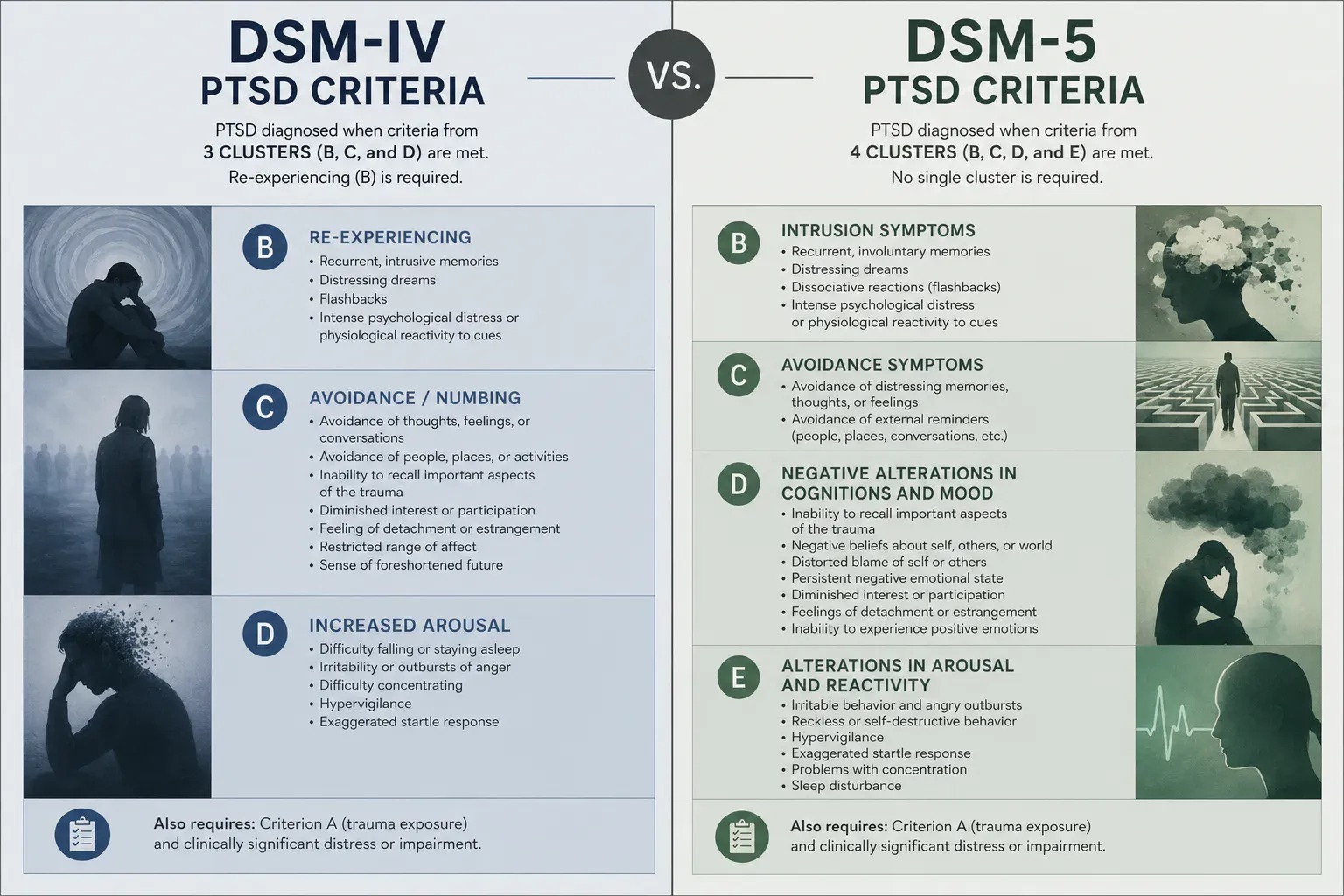
 The DSM-5 redefined PTSD diagnostic criteria in 2013, adding new symptom clusters and changing how clinicians diagnose trauma responses. Learn what changed and…
 Coping Strategies and Self-Management
 Temporal disorientation is a lesser-known PTSD symptom where the mind loses track of present time. Time anchoring offers practical tools to reconnect with now.
If things feel overwhelming, you don't have to sit with it alone. These Australian services are free, confidential, and available day and night.
Living with post-traumatic stress — or supporting someone who is — can feel isolating and confusing. PTSD Blog exists to make reliable information easier to find and gentler to read. Every article is written in plain English, grounded in current research, and shaped by a simple belief: understanding what's happening is often the first step towards feeling steadier.