
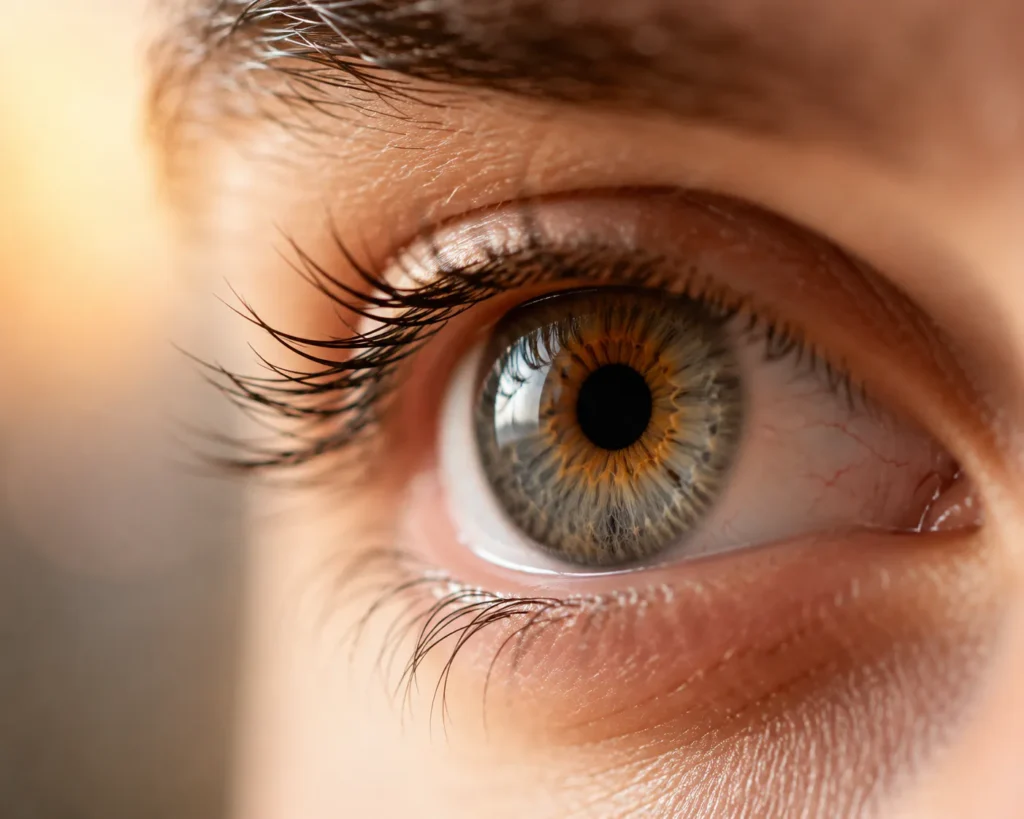
When Your Eyes Tell the Trauma Story
You might not realise it, but your eyes are constantly working to help you see and understand the world. When you’ve experienced trauma, this system can become disrupted in ways that go largely unnoticed in standard PTSD assessments. Oculomotor dysfunction, the impaired ability to move your eyes smoothly and accurately, is an emerging area of research that reveals how deeply trauma affects the body’s sensory systems.
Unlike flashback-focused symptoms, oculomotor changes represent a measurable, physiological shift in how your visual system processes information. This isn’t about what you see emotionally; it’s about the mechanics of how your eyes move and respond.
How Trauma Affects Eye Movement Patterns
Research shows that individuals with PTSD often display abnormalities in smooth pursuit eye movements, the ability to track a moving object smoothly. Studies examining eye tracking in trauma survivors reveal reduced accuracy and increased latency in these movements. Your brain’s visual cortex and the neural pathways connecting it to the brainstem become altered, affecting coordination between eye muscles.
Saccades, the quick, jerky eye movements you make when shifting focus, also change. People with PTSD may show increased saccadic latency (delayed response) and reduced accuracy when scanning their environment. This can feel like your eyes are sluggish or your vision feels less sharp, even when your eyesight itself is fine.
Pupil Response and Threat Detection
Your pupils do more than control light entry. They’re connected to your brain’s threat-detection systems and reflect your internal state. In PTSD, pupil responses become exaggerated or dysregulated. Some trauma survivors show sustained pupil dilation, reflecting a heightened state of alertness. Others display reduced pupillary responses to light, indicating dampened sensory processing.
These changes occur because trauma alters the neural circuits responsible for assessing danger. Your pupils become hypersensitive to perceived threats, dilating more readily in situations others might find neutral. This contributes to exhaustion and visual discomfort throughout the day.
Practical Impacts on Daily Life
Oculomotor dysfunction may manifest in ways you’ve already noticed but perhaps didn’t connect to trauma:
- Difficulty reading for extended periods, with eyes feeling strained or fatigued quickly
- Trouble following moving objects, like watching a ball in sports or tracking traffic
- Sensitivity to fluorescent lighting or rapid visual changes
- Blurred vision that comes and goes, despite normal eye health
- Dizziness or vertigo when moving your eyes quickly
- Difficulty maintaining focus on a single point
These symptoms often frustrate people because standard eye tests come back normal. Your optometrist finds nothing wrong, yet you experience genuine visual difficulty. This disconnect can lead to questioning whether the problem is real.
The Brain-Eye Connection
Research into the neurobiology of PTSD reveals that trauma affects the superior colliculus and frontal eye fields, brain regions controlling eye movement. When these areas become dysregulated, your eyes can’t perform their usual coordinated dance. The amygdala, your brain’s alarm system, sends constant signals that interfere with the visual processing pathways.
Additionally, the cerebellum, which coordinates eye movements with other body systems, shows altered activity in PTSD. This explains why some trauma survivors experience balance issues alongside visual difficulties.
Recognition and Next Steps
If you experience persistent visual discomfort or eye movement difficulties, mention this specifically to your healthcare provider. Oculomotor assessment isn’t routine in PTSD evaluations, but specialists in trauma neurobiology can perform eye-tracking tests to document these changes. The National Institute of Mental Health continues funding research into these physical manifestations.
Understanding that your eyes are affected by trauma is validating. It confirms that PTSD is a whole-body condition, not merely a psychological one. As research advances, treatments targeting oculomotor dysfunction may become part of comprehensive trauma care.