The Hidden Immune Battle in PTSD
When we think of PTSD, we typically focus on psychological symptoms: intrusive memories, avoidance, mood changes. But emerging research reveals a parallel biological struggle happening inside the body of trauma survivors. The immune system, your body’s defence network, becomes dysregulated after trauma, triggering a state of chronic, low-grade inflammation that can persist for years.
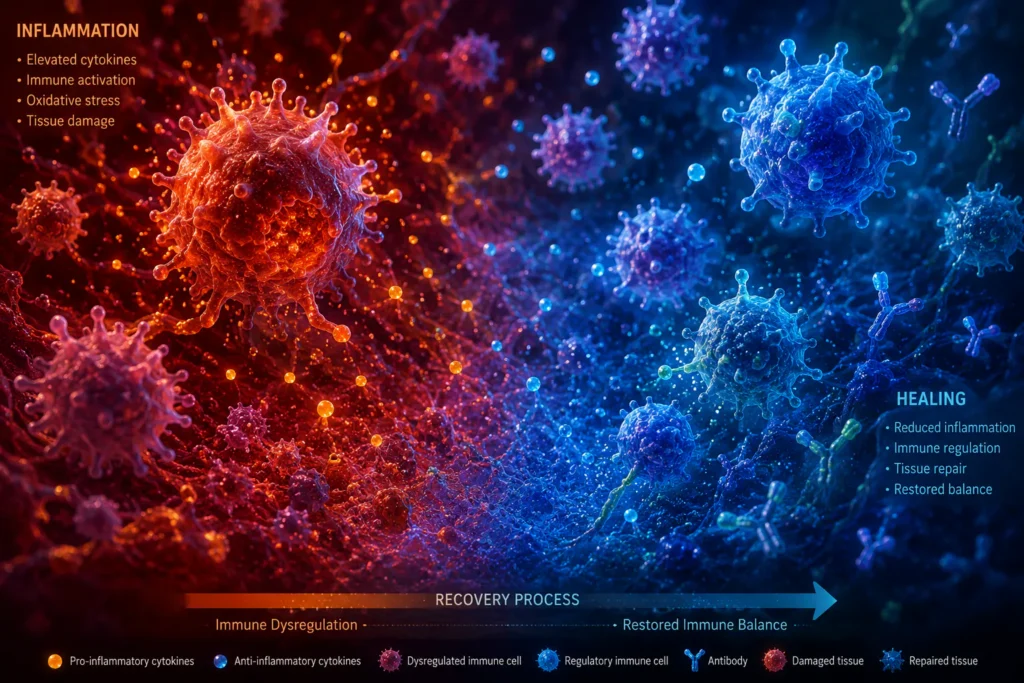
This isn’t simply stress causing inflammation. Rather, trauma fundamentally rewires how immune cells communicate and respond to threat signals. The result is a cascade of inflammatory molecules called cytokines that flood the bloodstream, creating a state of persistent immune activation. Understanding this connection matters because it explains why trauma survivors often develop physical health conditions alongside their psychological symptoms.
How Trauma Rewires Immune Response
Your immune system has two main branches: the innate immune response (your body’s rapid first responder) and the adaptive immune response (your body’s more targeted, learning-based defence). In healthy people, these systems work in balance, activating when needed and quieting down when the threat passes.
After trauma, this balance breaks down. The amygdala, your brain’s alarm centre, remains hyperactive, continuously signalling danger even when no actual threat exists. This perpetual alarm state keeps immune cells in a heightened state of readiness. Specifically, immune cells called microglia in the brain and macrophages throughout the body remain activated, continuously releasing pro-inflammatory cytokines like tumour necrosis factor (TNF), interleukin-6 (IL-6), and interleukin-1 beta (IL-1β).
Research shows that trauma survivors demonstrate elevated inflammatory markers even years after the traumatic event. This isn’t a temporary response, it’s a chronic state that your immune system has learned to maintain.
The Cytokine-Symptom Connection
Cytokines are chemical messengers that coordinate immune responses, but they also cross the blood-brain barrier and directly influence brain function. When cytokine levels remain chronically elevated, they affect mood, cognition, and pain perception. This explains why many PTSD patients report:
- Persistent fatigue unrelieved by rest
- Brain fog and difficulty concentrating
- Widespread pain and muscle tension
- Increased susceptibility to infections
- Worsening depression and anxiety symptoms
The relationship is bidirectional: PTSD symptoms intensify inflammation, and inflammation worsens PTSD symptoms. This creates a self-perpetuating cycle that standard trauma treatments may not fully address.
Physical Health Consequences of Immune Dysregulation
The chronic inflammation triggered by PTSD doesn’t stay confined to the brain. Over time, elevated cytokines contribute to the development of serious physical health conditions. Trauma survivors show higher rates of autoimmune disorders, cardiovascular disease, metabolic syndrome, and chronic pain conditions, not because of lifestyle factors alone, but because their immune systems are fundamentally altered.
For example, PTSD is associated with increased cardiovascular mortality, a risk that persists even after accounting for smoking, obesity, and other traditional risk factors. The immune dysregulation underlying PTSD appears to be a significant contributor to this elevated risk.
Measuring the Immune Impact
Unlike psychological symptoms, immune dysregulation can be measured through blood tests. Researchers now use inflammatory markers, particularly C-reactive protein (CRP), IL-6, and TNF-alpha, as biological indicators of PTSD severity and treatment response. Some clinicians are beginning to monitor these markers to assess whether trauma treatment is actually reducing the underlying immune activation.
This represents a shift in how we understand PTSD recovery. It’s not enough to reduce flashbacks or avoidance; true healing requires normalising immune function and bringing inflammatory markers back to baseline levels.
Treatment Implications Beyond Talk Therapy
Standard trauma-focused psychotherapy remains important, but addressing immune dysregulation may require additional approaches. Anti-inflammatory interventions, including aerobic exercise, Mediterranean-style nutrition, omega-3 supplementation, and adequate sleep, directly target the cytokine elevation underlying PTSD symptoms.
Some emerging research explores whether anti-inflammatory medications or immune-modulating treatments could enhance trauma therapy outcomes, though this remains an experimental area. The key insight is that treating PTSD comprehensively means addressing both the psychological and immunological dimensions of trauma.
Moving Towards Integrated Understanding
PTSD is fundamentally a whole-body condition. The immune dysregulation that follows trauma is neither a side effect nor a coincidence – it’s a central feature of how trauma changes biology. Recognising this connection helps explain why trauma survivors often feel physically unwell even when their psychological symptoms improve, and why holistic approaches addressing inflammation may be as important as addressing trauma memories.
As research continues to map the immune-trauma connection, trauma care is evolving towards truly integrated treatment that acknowledges both mind and body.